

Buying and selling in Finland
Buying and selling a vehicle in Finland
A used-car deal here is mostly a registration exercise with a handshake attached. The money and the keys are the simple parts; what decides whether the deal stays clean is the state of the vehicle's record and whether the transfer notifications actually get filed.
One deal, two sets of duties
Buyer and seller are not protected by the same habits. Below is what each side should do before the keys change hands, and what to keep afterwards in case the register needs correcting.
If you are buying
Run the public vehicle data lookup with the registration number or VIN before any money moves. Confirm identity, registration status, vehicle tax data, and that the person in front of you is the registered keeper. Ten minutes on the record answers most of what would otherwise surface after the sale.
If you are selling
Agree with the buyer which of you files the change of owner, then check that the entry appears in the register afterwards. Keep your copies of the registration certificate, the sale details, and the confirmation. This is what protects you from questions about a vehicle you no longer use or own.
Check the vehicle before you pay
Start with the register, not the advert. The public lookup service shows the vehicle's technical details and vehicle tax data, searchable by registration number or VIN. Compare what you find against what the seller told you. Check the registration status too, because a vehicle listed for sale off the road is a different proposition from one in traffic use. If the record and the description disagree, that is your signal to slow down and ask why.
Technical details and vehicle identity
Make, model, variant, first registration, and the identifiers that confirm the car in front of you is the car in the record. A mismatch here is not a small thing to sort out later; it is the moment to walk away and ask for the paperwork again.
Vehicle tax data
The register shows the tax position attached to the vehicle. Read it before negotiating price, because ongoing tax obligations follow the car and change what owning it will actually cost you month to month.
Registration status
In traffic use, off the road, or decommissioned. Each status carries its own conditions for moving and using the car, and each one changes what you can legally do on the drive home. Confirm it rather than assume it from the advert's wording.
Registered keeper
The person selling the car should be the keeper shown in the register. If a third party is presenting the vehicle, ask who holds the record and why they are selling it. That question alone resolves many unclear sales before any payment is made.
Imports and first registration
For an imported car, confirm that first registration has actually been completed rather than started. A vehicle in the middle of that process is not the same purchase as one already on Finnish plates with a settled record.
The most common failure in a private sale is not a hidden fault. It is two people each assuming the other filed the notification.
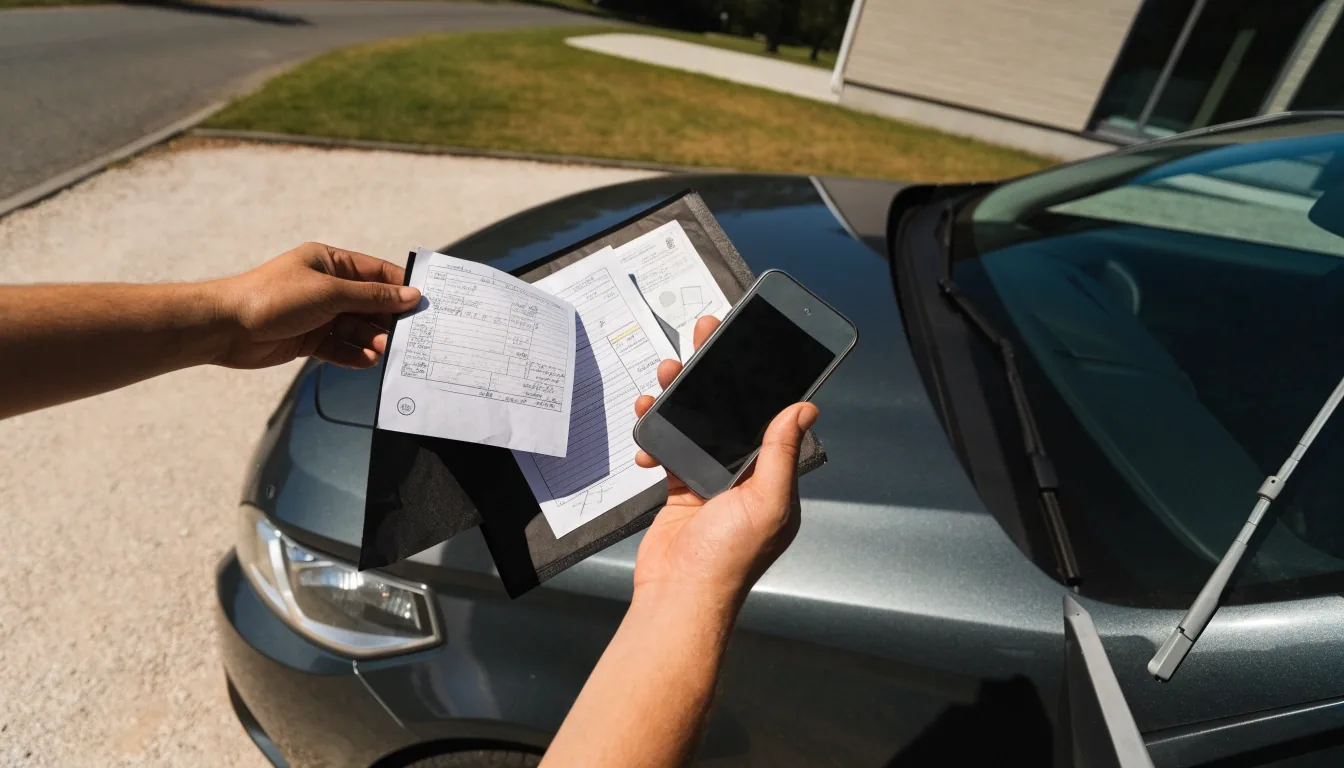
Before the handover: photos and paperwork
Photograph the vehicle and its documents as they are on the day of sale, not after any cleaning or repairs. Keep copies of the registration certificate and the details of both parties. If the vehicle is being sold with a known fault or off the road, note it in writing, even briefly.
Photograph before cleaning
Shoot the car, the odometer area, the tyres, and any damage as they are. Later photos cannot prove an earlier condition.
Copy the certificate
Keep a copy of the registration certificate and the identifiers you checked in the register, so a later query can be answered from your own file.
Record both parties
Names, contact details, the date, and the agreed price. Sellers gain as much as buyers from having this written down.
Write down known faults
A fault or an off-road status noted in one line at the time of sale is far easier to stand behind than a detail remembered differently months later.
These records are not about distrust; they are what any later correction will be checked against. Sellers benefit from the same discipline, because proof of what was filed protects them most. If the details are captured once, at the right moment, a disagreement about what was agreed rarely reaches a stage where it matters.
Transfer permits explained
A transfer permit allows a vehicle to be moved under defined conditions when the normal registration situation does not cover the movement. It is a specific tool, not a general permission to drive an unregistered car.
If you are moving a vehicle between locations and are unsure whether its status or registration allows it, check before you drive. The permit exists to solve a real logistical problem, but it has conditions attached, and using it outside those conditions undoes the point.
- What it is for
- Covering a defined movement, such as bringing a vehicle to inspection or to a workshop, when the ordinary registration route is not available for that trip.
- What it is not
- A standing right to use a vehicle whose tax, inspection, or registration position does not permit ordinary driving.
- Before you move
- Confirm the vehicle's current registration status, which conditions apply to the trip you intend to make, and how long the arrangement covers you.
Change of owner and change of holder
The transfer is recorded through two possible notifications. A change of owner records the legal owner; a change of holder records the actual user, which can differ in leased, company, or family arrangements. File the notification that matches the real situation, and agree in advance which party submits it. Both sides should keep proof.
Change of owner
Used when the vehicle genuinely changes legal owner, which is the normal case in a private sale between two individuals. The register follows the ownership, so this is the notification most private deals need.
- File it as soon as the sale is agreed and the vehicle has changed hands.
- Decide in advance whether buyer or seller submits it; either may, but someone must.
- Keep your copy of the registration certificate and the transfer details.
Change of holder
Used when the person using the vehicle is not the person who owns it. Leasing, company cars, and vehicles driven by a family member are the usual arrangements where the holder and the owner are two different names.
- File it when the actual day-to-day user changes, even if ownership does not.
- Keep the owner and the holder paperwork consistent instead of mixing the two.
- Check the entry appears in the register once it has been submitted.
The most common failure in private sales is simple: each party assumed the other filed it, and neither did. Agreeing the responsibility out loud before the handover takes seconds and removes the whole problem.
Chains of intermediate owners
If the vehicle has passed through several hands and the notifications were not made for each step, the record becomes a chain of unresolved owners. Traficom's fee table has a much higher fee for registering intermediate owners in exactly this case. That fee exists to make clear that the Finnish system expects each transfer to be filed as it happens.
As a buyer, check that the seller is the registered keeper before you pay. As a seller, do not sell a vehicle whose record you know is tangled: the next person will discover it, and the correction will land on whoever is holding the keys at the time.
What buyers should verify in the data
The register shows technical information and vehicle tax data, and both matter for what owning the car will cost and require. Verify the vehicle's identity, its status, and that its tax data is visible and consistent. For imports, confirm that first registration has actually been completed rather than started.
This is not a deep technical inspection; it is reading the public record that already exists. Ten minutes here answers most of the questions that would otherwise surface after the sale, and it gives you something concrete to compare against the advert's claims.
What sellers should do after the sale
Once the vehicle changes hands, confirm that the transfer notification appears in the register. Do not assume it happened because you signed something. If the notification is missing, follow up with the buyer while you still have their details and the transaction is fresh.
This protects you from later questions about a vehicle you no longer own or use. Keep your copies of the documents and the confirmation until the entry clearly shows the new keeper.
After the handover
Check the register for the transfer entry rather than relying on a signed form.
If it is missing, contact the buyer while the sale is recent and the details are easy to retrieve.
Hold on to the document copies and the confirmation until the new keeper is visible in the record.
Pass on anything the buyer needs about inspection timing and the vehicle's current status.
Inspections and status around a sale
A vehicle's inspection schedule and registration status follow it into new ownership. If the car is due for inspection soon, that is a negotiation point and a planning point, not a surprise for the buyer to discover later. If it has been decommissioned, the buyer needs to understand what commissioning involves before they can use it. Both facts are visible in the register, which is why the pre-purchase lookup is the one step worth never skipping.
Short answers to the usual questions
If your situation involves leases, company vehicles, or a record that has already fallen behind, ask us before you commit to a price.
Ask about a transferHow do I check a car's history before buying it in Finland?
Use the public vehicle data lookup service with the registration number or VIN. It shows technical details, vehicle tax data, and the registration status.
What is a transfer permit for?
It allows a vehicle to be moved under defined conditions when normal registration does not cover the movement. It is not general permission to drive an unregistered car.
Who is responsible for filing the change of owner?
Either party can file it, as long as you agree in advance and keep proof. Never rely on an assumption.
What if the seller is not the registered keeper?
That is a red flag. An unresolved ownership chain can trigger the much higher intermediate-owner fee later, and sorting it out will not be the seller's problem by then.

Do the record work before the handover
Do the checks, agree who files the notification, and keep the copies. The rest of a Finnish vehicle deal is routine, whichever side of it you are on. If something in the record does not add up, ask us before the money moves rather than after.
Trafflicom · Hatanpään valtatie 34, 33100 Tampere, Finland · +358 3 3142 5590 · [email protected] · Monday–Friday 9:00–18:00