
Notification one
Change of owner
Records who holds the vehicle legally. This is the entry that ties the register to a named owner and the one buyers, sellers, and insurers look up first.
Hatanpään valtatie 34, 33100 Tampere, Finland
Hatanpään valtatie 34, 33100 Tampere, Finland
+358 3 3142 5590 [email protected]Monday–Friday: 9:00–18:00

Registration guide
First registration for new and imported vehicles, changes of owner and holder, and how plates follow a vehicle's status in the Transport Register — read the part that matches where you are.
Where to begin
Registration is the act that puts a vehicle into the national Transport Register and makes it legal to use in traffic. The channel you use depends on your situation: dealerships often register new vehicles before handover, inspection stations handle many import and technical cases, and insurance companies and online services cover a range of notifications. Follow the cross-references when your case spans more than one.
A new vehicle or an imported vehicle must be registered before it is used in traffic. First registration is the step that creates the vehicle's entry in the Transport Register and links it to an owner.
In many cases it can be done electronically; in others it runs through an inspection station offering registration services. The practical preparation is the same either way. Get the sequence right and the rest moves faster.
The order that works
Confirm the registration number or VIN and check what the register currently says before any paperwork moves.
Owner details, a valid ID, and current contact information. If your address changed recently, fix that first.
Insurance has to be in place before the vehicle moves in traffic, not after the first trip.
Electronic service or inspection station, depending on whether the case needs technical checks or document handling.
Car dealerships can register a new vehicle on behalf of the buyer in many cases, and they often handle first registration for vehicles they sell. It is part of the normal delivery workflow when the paperwork is completed before handover.
What to verify before you drive away
If anything is missing, it is far easier to correct before you leave the lot.
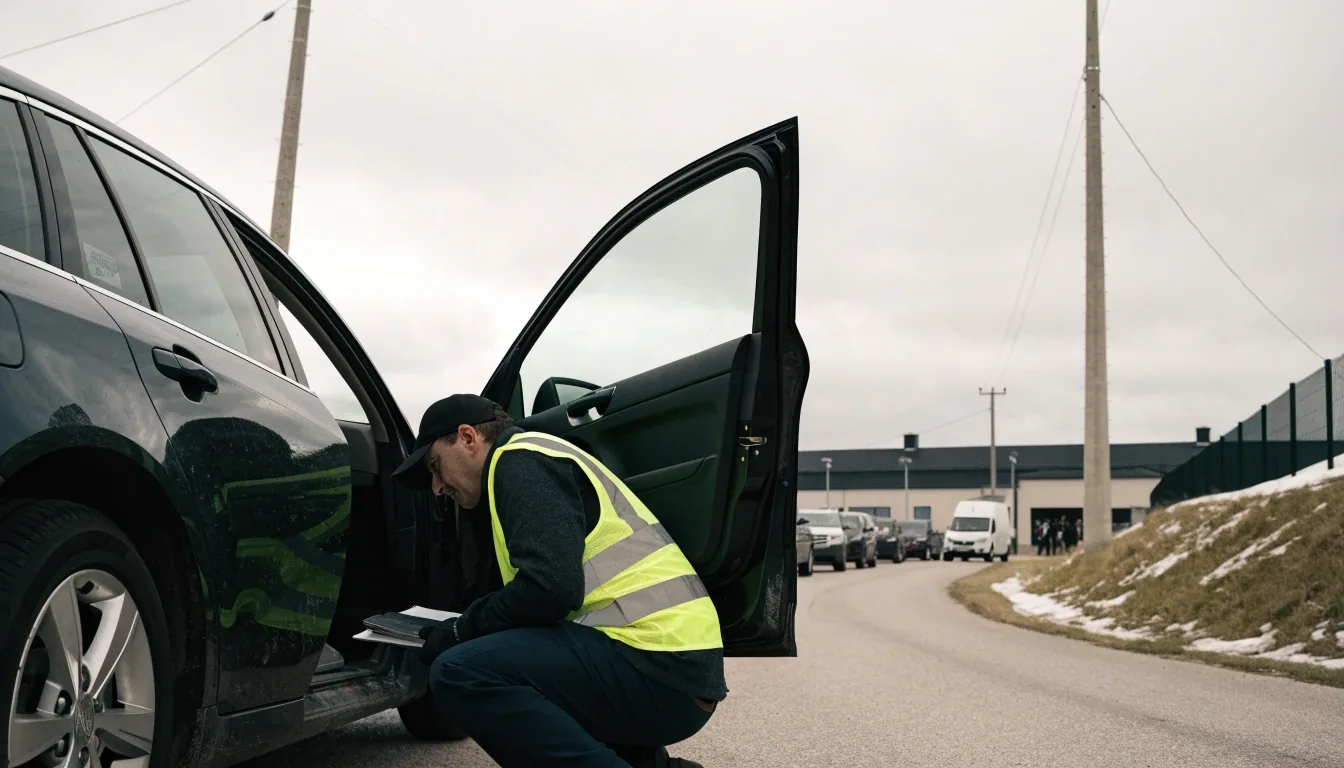
Imported vehicles are the case where the process most often spans several channels. First registration is required before use in Finland, and technical inspection and tax matters can sit alongside it.
Electronic steps may be available, but an inspection station is commonly involved for documentation and checks — particularly with EU plates or incomplete foreign papers. Plan the order before you start: identify, insure, register, inspect. Skipping ahead usually means redoing work.
Two distinct notifications cover transfers. In straightforward private sales the two often coincide, but they are still separate entries — and each leaves its own trace in the register.
Notification one
Records who holds the vehicle legally. This is the entry that ties the register to a named owner and the one buyers, sellers, and insurers look up first.
Notification two
Records who actually uses the vehicle day to day. It can differ from the owner when a car is used by someone else under an arrangement.
Agree it in advance
Seller and buyer should agree in advance who files what and by when, and each should keep proof of their part. The single most common transfer problem is a notification that both sides assumed the other had submitted.
Some vehicles pass through dealers, agents, or several private sellers before reaching the current keeper. When transfer notifications have not been made for all intermediate owners, Traficom's fee table applies a separate fee that is much higher than a normal change of owner.
Complex ownership chains are handled explicitly, and the eventual cost falls on the party who wants a clean record. Filing every transfer at the time it happens avoids the whole situation.
Clean chain vs. neglected chain

Plates belong to the vehicle's registration entry, and their validity follows the vehicle's status in the register. If a vehicle is decommissioned, that status affects the plates and their permitted use.
Finnish EU plates have their own display rules, which is why the sticker question keeps appearing in forums and at service desks. Before ordering plates, replacing them, or asking about a sticker, look up what the register currently says about the vehicle.
You do not need a thick folder, but you do need consistent information. The registration certificate, a valid ID, insurance details, and the vehicle's identifying data (registration number or VIN) cover most situations.
For imports, foreign documents should be complete and legible. For transfers, both parties' details need to be current. If your address or name has changed recently, fix that first — every notification downstream depends on it being right.
Before you register or transfer anything, look the vehicle up. The public lookup service shows technical details and vehicle tax data, searchable by registration number or VIN.
Buyers should treat this as a standard pre-purchase step: it confirms what the vehicle is and what obligations follow it. A mismatch between what the seller describes and what the register shows is a reason to pause, not a clerical footnote. Five minutes here can save a filing dispute later.
Check what stays compliant over timeRegistration stalls for recognizable reasons: an unresolved ownership chain, an insurance gap, missing import documents, or a vehicle whose status nobody checked. The remedy is almost always to return to the register entry and see what is actually recorded.
From there, file the missing notification, arrange the insurance, or book the inspection station visit. If a required notification has been skipped long enough, it can be treated as a vehicle violation, with plates removed and a fine issued. Do not let a small gap age.
A transfer was never filed somewhere along the way, so the register still shows an earlier keeper.
Coverage lapsed or was never arranged, so the vehicle cannot be used while the entry is resolved.
Foreign papers are incomplete or illegible, and the inspection station cannot move the case forward.
Nobody looked up whether the vehicle is commissioned, decommissioned, or carries tax obligations.
Short answers to the points that come up again and again at service desks and in private sales. The full detail sits in the chapters above.
The registration certificate, valid identification for both parties, and current contact details. Insurance information helps if the change affects who is responsible.
Electronic steps are often available, but an inspection station is commonly part of the import path for technical checks and document handling.
Either can, as long as you agree in advance and keep proof. The risky option is assuming the other party did it.
The register shows the wrong keeper, and a later cleanup can trigger the higher intermediate-owner fee. File each transfer as it happens.

Your next step
Whether you are registering a new car, importing one from another country, or transferring a used vehicle, the same rule applies: file each notification when it happens and check the register entry before you commit to anything.
Trafflicom · Hatanpään valtatie 34, 33100 Tampere, Finland · +358 3 3142 5590 · [email protected] · Monday–Friday 9:00–18:00